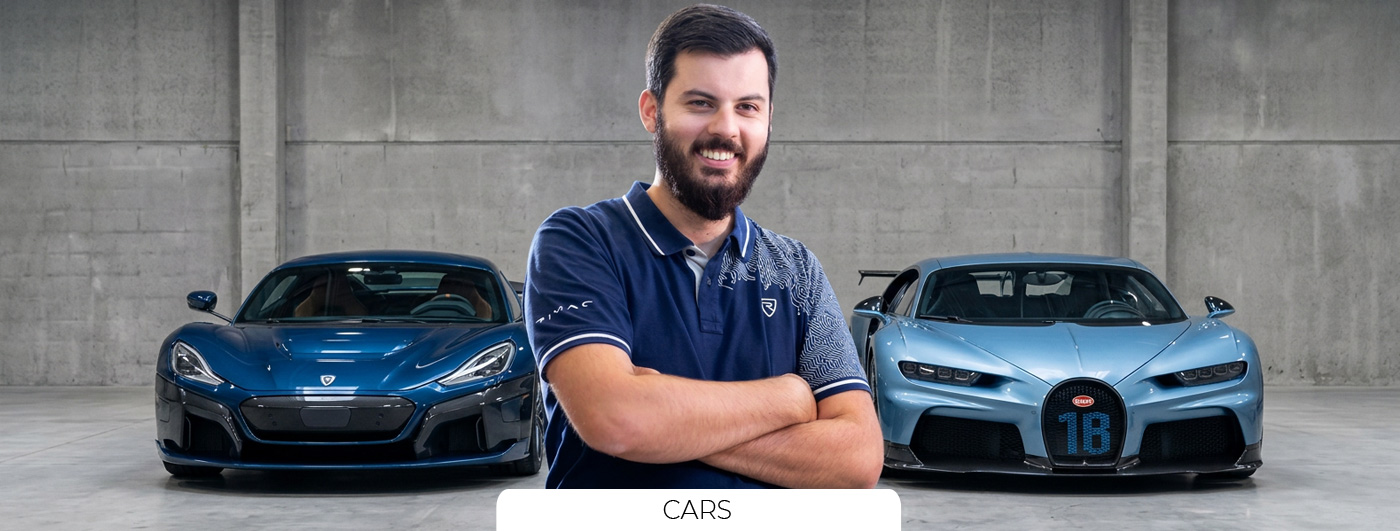
MATE RIMAC: STOP TRYING TO BEAT CHINA AT ITS OWN GAME
Europe’s automotive industry is going through one of its most difficult periods in decades. Thousands of jobs are disappearing as manufacturers restructure, factories face uncertain futures and established brands struggle to compete in a rapidly changing global market. Volkswagen alone has agreed to cut as many as 100,000 jobs worldwide by 2030, while Jaguar Land Rover, Nissan, Ford and major suppliers have announced substantial reductions of their own.
The reasons are complicated. Chinese manufacturers have moved quickly into electric vehicles, combining competitive pricing with sophisticated technology and increasingly rapid development cycles. At the same time, European manufacturers are trying to finance the transition to electric and software-defined vehicles while continuing to develop profitable combustion-engine and hybrid models. Suppliers across Europe announced another 18,900 job cuts in the first half of 2026 alone.
Against this backdrop, Mate Rimac has offered an unusually direct opinion.
In a recent Instagram video, the Croatian entrepreneur and head of Bugatti Rimac and the Rimac Group argues that European manufacturers should stop trying to compete with Chinese brands by simply following the same formula: ever-larger screens, fewer physical controls, faster charging and increasingly technology-heavy interiors.
His argument is not that technology should be abandoned. Rather, Rimac believes European manufacturers should concentrate on what they can do exceptionally well — particularly luxury, craftsmanship, materials and emotional appeal.
His example is telling. Sitting inside a classic Rolls-Royce, Rimac points to its leather, wood and physical details. For him, these are not outdated features; they represent something increasingly difficult to replicate at scale. His comparison with Swiss watchmaking is equally pointed: Switzerland does not attempt to manufacture watches for everyone. Instead, it has built an extraordinarily profitable industry around craftsmanship, heritage and exclusivity.
FIND THE NICHE
Rimac’s proposition is essentially that European manufacturers need to identify their own territory rather than entering a technology race they may struggle to win. Chinese manufacturers are already moving exceptionally quickly in areas such as EV development, connectivity and charging technology. Reuters recently noted that some Chinese companies can develop new electric models in 18 months or less, while the competition is increasingly focused on charging speed and technological features.
Trying to beat that on its own terms could become an expensive exercise.
There is, however, an important complication: companies such as Mercedes-Benz, BMW, Audi and Volkswagen cannot simply become boutique luxury manufacturers. They need volume to support enormous production networks, factories and employment. Rimac’s vision therefore raises a difficult question rather than providing an easy solution: how much of Europe’s automotive industry can realistically move upmarket?
Perhaps the answer lies somewhere between the two extremes.
Technology will remain fundamental to the modern car, but luxury does not necessarily mean adding another screen. For an increasingly sophisticated buyer, exclusivity, tactile materials, design, craftsmanship, comfort and a sense of occasion can be just as important as processor speed or charging time.
That could be Europe’s opportunity.
Rather than attempting to become a European version of China’s rapidly evolving technology companies, perhaps the continent’s historic luxury manufacturers need to become even more European — and remind customers why they wanted a Mercedes, Bentley, Rolls-Royce, Ferrari or Porsche in the first place.
Rimac, ironically, may be one of the most interesting people to make that argument. His own career was built around electric technology and extreme performance, yet his message to Europe is not to abandon innovation. It is to understand where innovation actually creates value — and where heritage, craftsmanship and individuality remain impossible to commoditize.